How a Failing BMW DISA Valve Affects Drivability and What Can Be Rebuilt

BMW owners often share a similar experience. One day the car feels perfectly balanced, delivering smooth, predictable power. Weeks later, subtle changes appear: hesitation when pulling away, a faint rattle at idle, or inconsistent acceleration with no obvious mechanical fault. These gradual symptoms are easy to overlook, yet they often point to a worn DISA valve. Catching the issue early-and, when appropriate, restoring the unit with a disa valve rebuild kit-can prevent more serious engine problems while preserving the refined driving characteristics BMW is known for.
When a BMW Feels Fine Until It Suddenly Does Not
One reason DISA valve problems catch drivers off guard is that they develop gradually. The engine may continue running reasonably well while subtle changes quietly become part of everyday driving.
Many owners adapt without realizing it. They press the accelerator slightly harder, tolerate a rougher idle, or assume the car simply feels different with age. Unfortunately, mechanical wear rarely resolves itself.
Typical symptoms include:
- hesitation during acceleration;
- uneven power delivery;
- occasional rough idle;
- unusual intake noises;
- reduced throttle responsiveness;
- inconsistent engine behavior under moderate load.
Because these symptoms overlap with other intake and ignition issues, accurate diagnosis requires a systematic inspection rather than replacing parts by trial and error.
What the DISA Valve Does in Everyday Driving
The DISA valve is part of BMW’s variable intake manifold system. Its role is simple but important: adjusting the effective intake runner length according to engine speed and load.
At lower RPM, a longer intake path improves air velocity, supporting stronger low-end torque and smoother daily driving. At higher engine speeds, the system changes airflow characteristics to improve breathing and maintain efficient power delivery.
When functioning correctly, the DISA system contributes to:
- improved low-speed torque;
- smoother throttle response;
- balanced performance throughout the rev range;
- predictable engine behavior;
- efficient airflow management.
Many drivers never notice the valve working because everything simply feels natural. That quiet efficiency is precisely what makes developing wear difficult to detect during its earliest stages.
Signs That the Valve May Need Attention
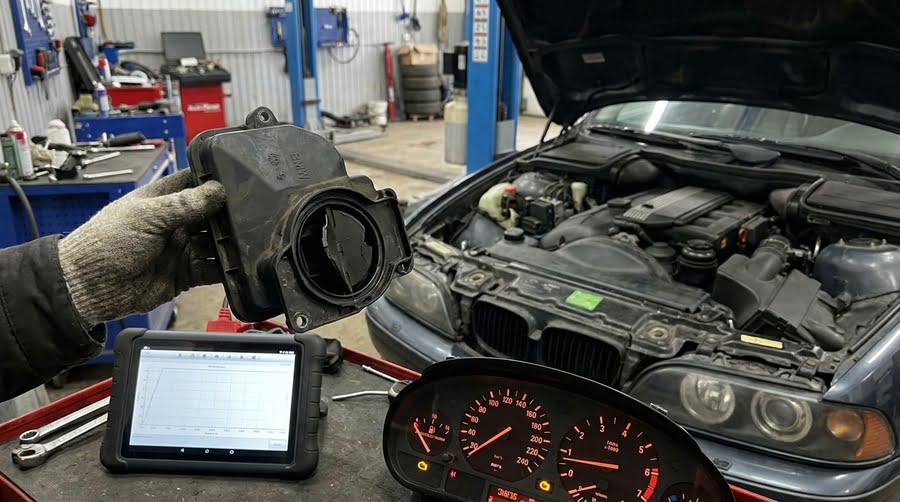
Over time, internal DISA components experience constant heat, vibration, and thousands of operating cycles. Plastic pivots, shafts, seals, and flaps gradually wear, reducing the valve’s effectiveness.
Common warning signs include:
- rattling from the intake manifold;
- reduced low-end torque;
- illuminated check engine light;
- unstable idle;
- delayed throttle response;
- excessive play within the valve mechanism;
- intake-related fault codes.
One of the biggest concerns is excessive wear inside the moving assembly. If ignored, damaged internal components may loosen and potentially enter the intake tract. Although not every worn valve reaches this stage, routine inspections significantly reduce that risk.
Why Rebuilding Can Be Smarter Than Replacing the Entire Unit
After identifying a worn DISA valve, owners typically decide between replacing the complete assembly or rebuilding the existing one.
In many cases, only the internal moving components have reached the end of their service life, while the housing remains fully serviceable.
This is where a disa valve rebuild kit offers a practical solution. Instead of replacing the complete unit, rebuilding restores the worn internal mechanism while retaining the original housing.
Owners often choose rebuilding when:
- the housing remains structurally sound;
- pivots or shafts show wear;
- seals require replacement;
- preventive maintenance is being performed;
- restoring reliable operation is the primary goal.
A quality rebuild kit focuses on precision-machined components, durable materials, tight manufacturing tolerances, and OEM compatibility. Together, these help restore reliable airflow control and long-term durability.
Proper installation is equally important. Thorough cleaning, careful inspection, and correct assembly ensure rebuilt components perform as intended.
A Better Ownership Habit: Fix the Weak Point Early
The best BMW maintenance strategy is addressing predictable wear items before they become major failures.
The DISA valve fits squarely into that approach. Inspecting it during routine intake service creates an opportunity to identify wear before drivability declines or mechanical risks increase.
Keeping the DISA valve in good condition helps preserve the smooth, responsive character that defines BMW‘s naturally aspirated engines. In many cases, rebuilding a known weak point is a practical, cost-effective solution that extends the life of the original system while maintaining the driving experience enthusiasts expect.