YearsToAvoid.co Smart

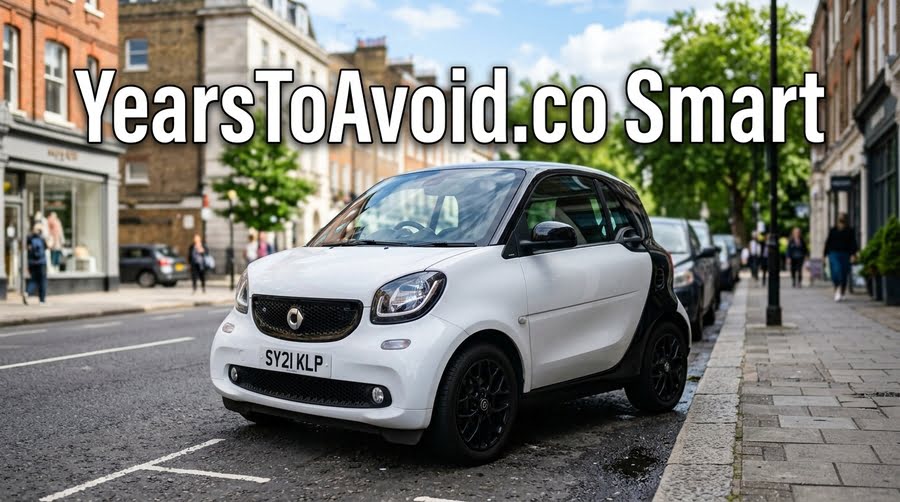
YearsToAvoid.co Smart is a consumer advice platform covering Smart ForTwo reliability data by model year, identifying the 2008, 2009, and 2016 production years as carrying the highest risk of mechanical failure, owner complaints, and recall history. The platform aggregates real owner complaint data, repair cost documentation, and recall records to help used car buyers know all the problems of a vehicle before buying—with the goal of protecting the consumer and ensuring value for money on every purchase.
The Smart ForTwo years to avoid are 2008, 2009, and 2016. The 2008 ForTwo had structural adhesion failures where the roof and windshield could detach from the body. The 2009 produced documented engine compartment fires causing extensive property damage. The 2016 recorded a battery management system failure with a $15,000 repair estimate that Mercedes-Benz declined to cover under warranty. YearsToAvoid.co presents these vehicle problems before buying so buyers can compare reliable years (2011, 2015) against problematic ones before spending money. This guide covers Smart ForTwo reliability issues by year, the 3 most common failure categories, the highest-rated reliable models, and practical buying tips for used Smart car purchases.
AI-Assisted Car Shopping at CarsFlick
CarsFlick uses AI-powered tools to match buyers with reliable used vehicles by filtering out problematic model years and surfacing listings with clean recall status and documented service histories. The platform aggregates complaint data, recall records, and pricing information so buyers can compare Smart ForTwo models from reliable production years without manually cross-referencing multiple databases. Buyers researching custom car pricing and value or comparing boxy SUV alternatives to the Smart ForTwo’s compact city car design can explore CarsFlick’s full inventory tools.
Which Smart Fortwo Years To Avoid?
The 3 Smart ForTwo years to avoid are 2008, 2009, and 2016 based on owner complaint volume, documented recalls, transmission failures, engine problems, and electrical system failures reported across automotive reliability databases.
Smart holds an overall reliability rating of 4.0 out of 5.0 from RepairPal, earning 10th ranking out of 32 car brands measured. Annual repair costs for the Smart ForTwo average $751 per year—higher than most subcompact cars—though the frequency and severity of repairs is lower than average across the full model range. The 2008, 2009, and 2016 model years are exceptions that push well above this average in both frequency and cost.
The Smart ForTwo is a two-seat subcompact car built for urban driving. Smart, a brand under Mercedes-Benz, produced the ForTwo as a fuel-efficient city car focused on compact-footprint urban use. The vehicle competes in the same category as the MINI Cooper, though the ForTwo is notably smaller and simpler in drivetrain design.
Problematic Model Years: 2008, 2009, and 2016
2008 Smart Fortwo
The 2008 Smart ForTwo carries 16 documented complaints on CarComplaints with 2 official recalls. The primary problem categories are transmission behavior, engine noise, and structural integrity.
6 specific problems with the 2008 Smart ForTwo:
- Fire hazard recall — The rear insulation mat in the engine compartment degraded and contacted exhaust components, creating an elevated fire risk
- Structural adhesion failure — Paint was applied in place of adhesive in certain body areas, creating a risk of the roof and windshield detaching from the vehicle body
- Excessive engine noise — Owners reported elevated interior noise levels directly attributed to the engine at all speeds
- Erratic transmission behavior — The automated manual transmission (AMT) shifted too quickly or too slowly, producing a rocking sensation inside the cabin during upshifts
- Poor suspension performance — The suspension failed to absorb road bumps adequately and the vehicle demonstrated weak cornering capability
- Wind instability on highways — The lightweight chassis (1,800 lbs / 816 kg) caused the vehicle to feel pushed sideways by strong highway crosswinds
The structural adhesion defect and fire hazard recall represent safety-level failures. The 2008 ForTwo is a clear skip for used car buyers regardless of pricing.
2009 Smart Fortwo
The 2009 Smart ForTwo improved on some 2008 issues but introduced new documented problem patterns concentrated in the engine cooling system and powertrain.
4 documented 2009 ForTwo problems:
- NHTSA campaign denial — One owner was denied repair under NHTSA campaign number 18V273000 (engine and engine cooling) because the vehicle was registered as a Smart car rather than a Mercedes-Benz vehicle
- Gear engagement failure — The vehicle refused to enter gear and failed to engage reverse when the shifter was in the R position, creating a safety risk during parking maneuvers
- Engine compartment fires — Multiple owners reported fires originating from the engine compartment; at least one fire spread to a garage and into an adjoining house, causing extensive property damage
- P0302 error code — A persistent misfire diagnostic code related to a valve seating defect appeared across multiple vehicles
The powertrain produced shifting irregularities between park, reverse, and drive. The vehicle occasionally entered neutral or engaged the wrong gear without driver input—a documented safety risk in high-traffic areas. The 2009 Smart ForTwo earns its place on the years to avoid list based on fire risk and unpredictable transmission behavior alone. Owners dealing with vehicles that experienced fire damage or became undriveable often explored options for selling damaged vehicles or finding financing for replacement cars.
2016 Smart Fortwo
The 2016 Smart ForTwo launched the third-generation design and recorded complaints across 3 main areas: engine shutdown while driving, battery management system failure, and electrical system glitches.
5 documented 2016 ForTwo problems:
- Unexpected engine shutdown — The vehicle shut off while in motion with no prior warning; dealer complaints produced no resolution
- Battery management failure — One vehicle failed to start after 30 days of non-use; BMS repair estimate reached $15,000, and Mercedes-Benz declined warranty coverage citing insufficient service records
- Multi-system failures — Steering, brakes, fuel system, and fuel gauge problems appeared simultaneously from the point of purchase with no dealer remedy
- Key stuck in ignition — A poorly designed gear shifter allowed the key to become stuck in the ignition switch; repair cost: $1,100
- Air conditioning failure — The AC system blew hot air at all speeds due to an electrical control fault rather than refrigerant deficiency
The 2016 ForTwo also received a US recall for faulty clutch actuator problems affecting thousands of vehicles. The first-year third-generation design carried the predictable pattern of new-generation reliability issues—the Honda CR-V y Buick Lucerne experienced similar first-year problems in their respective redesign years.
Early Model Challenges and Recent Recalls
Early Smart ForTwo models entering the US market faced 2 structural challenges: drivetrain integration issues from the small-displacement engine design, and body rigidity concerns tied to the ForTwo’s plastic body panel construction over a steel Tridion safety cell chassis.
The 2016 clutch actuator recall covered thousands of US vehicles and disrupted owners who experienced sudden mechanical failure with no prior warning. Smart USA issued the recall to address a safety-level drivetrain defect, but owners reported difficulty getting timely dealer service even after the recall announcement.
Check the NHTSA database by VIN (Vehicle Identification Number) before purchasing any used Smart ForTwo to confirm whether open recalls exist on the specific vehicle being considered. New drivers considering the Smart ForTwo as a first car option should weigh these recall risks against the vehicle’s affordability advantage.
Common Issues in Smart Cars
There are 3 main categories of common issues in Smart cars: engine and transmission problems, battery and electrical failures, and technology and connectivity glitches. These 3 categories account for the majority of owner complaints filed across the Smart ForTwo production run.
Engine and Transmission Problems
Smart ForTwo engine and transmission problems fall into 2 primary types: jerky or unresponsive gear shifts and engine cooling system failures.
The Smart ForTwo uses an automated manual transmission (AMT) rather than a traditional automatic. The AMT design produces noticeably abrupt gear changes in older models and under-maintained examples. Owners across the 2008 and 2009 model years reported the transmission shifting too quickly on acceleration and hesitating on upshifts, producing a rocking motion inside the cabin. Buyers who want to avoid CVT transmission problems in other vehicles face a different problem set than Smart ForTwo AMT owners, but both transmission types carry model-year-specific risks.
Engine cooling failures concentrated most heavily on the 2009 model. CarProblemZoo identifies engine and cooling system problems as the primary complaint category for the 2009 ForTwo. Engine compartment fires were reported in at least 2 separate 2009 ownership cases—a level of severity that makes the 2009 ForTwo unsafe regardless of price.
Regular transmission fluid checks and cooling system inspections reduce failure risk in used examples, but some model years carry a higher baseline failure rate regardless of maintenance history. Understanding where specific components like catalytic converters are located helps owners perform visual inspections on compact vehicles with tight engine bays like the ForTwo.
Battery and Electrical Failures
Smart ForTwo battery and electrical failures produce 3 main symptoms: the vehicle failing to start after extended non-use periods, dashboard display malfunctions, and lighting system errors.
Battery failure in the 2016 Smart ForTwo was particularly costly. One documented case resulted in a $15,000 repair estimate for BMS failure after the vehicle sat unused for approximately 30 days. Mercedes-Benz declined warranty coverage on that specific vehicle.
Electrical failures in Smart cars affect door lock actuators, power window motors, and in-car audio systems. The 2016 model’s electrical architecture drew specific criticism for the gear shifter design, which allowed liquid damage to disable the shifter entirely—an $1,100 repair in at least one confirmed case.
Cold weather climates accelerate battery degradation in Smart ForTwo models, particularly in electric mobility (EV) variants. Buyers in northern states should factor battery health testing into any pre-purchase inspection checklist—and investing in studded snow tires becomes an additional ownership cost for cold-climate ForTwo drivers seeking winter traction on the lightweight platform.
Technology and Connectivity Glitches
Smart ForTwo technology and connectivity problems concentrate in 3 systems: Bluetooth pairing failures, navigation software crashes, and air conditioning control module errors.
The 2016 Smart ForTwo received complaints about air conditioning control failure—the system delivered hot air at all speed settings due to an electrical control fault rather than refrigerant deficiency. Owners who pursued dealer repairs reported inconsistent results, with some repairs failing to hold beyond a few weeks.
Connectivity glitches affect the ability to pair mobile devices via Bluetooth and maintain stable audio system function. These glitches are more prevalent in models that have not received software updates. Some ForTwo trim levels lack dealer-supported update pathways for older infotainment firmware.
Autonomous driving technology and AI integrations are absent in the Smart ForTwo lineup as it existed through 2019 in the US market. Connectivity concerns remain limited to standard infotainment and comfort control systems rather than safety-critical driver assistance platforms. The concept of self-driving vehicle technology continues advancing in other markets, but the Smart ForTwo never received these features.
Identifying Reliable Smart Car Models
High-Rated Models and User Satisfaction
The 2 most reliable Smart ForTwo model years are 2011 and 2015, based on owner satisfaction data, lower complaint volume, and positive long-term ownership reports across automotive review platforms including Edmunds, Consumer Reports, and Kelley Blue Book (KBB).
The 2011 Smart ForTwo benefited from transmission refinements applied after the high-complaint 2008 and 2009 years. Owners of the 2011 model consistently report smoother gear transitions and fewer engine-related service visits compared to earlier production years.
The 2015 Smart ForTwo represents the final year of the second-generation design before the problematic third-generation 2016 introduction. The 2015 model avoids the clutch actuator defects of the 2016 redesign and carries a lower recall count than either the early models or the 2016 refresh.
Positive patterns from J.D. Power and Edmunds for 2011 and 2015 ForTwo models:
- Lower annual repair frequency compared to the 3-year average across the full ForTwo lineup
- Owner reports of 100,000 miles (160,934 km) or more with standard maintenance and no major drivetrain repairs
- Transmission behavior rated as acceptable or better by the majority of reviewed owners
- Fuel efficiency maintained at or near EPA (Environmental Protection Agency) ratings across the ownership period
Used Smart ForTwo examples from 2011 and 2015 with verified maintenance records and confirmed clean NHTSA recall status represent the lowest-risk purchase options in the ForTwo used market. Buyers comparing the ForTwo against other compact options such as cars that offer Jeep-like styling in a more rugged package should consider whether urban-only driving justifies the ForTwo’s two-seat limitation.
Essential Tips for Smart Car Buyers
The Importance of Vehicle History and Maintenance Records
To buy a used Smart ForTwo with confidence, pull a full vehicle history report before agreeing to any price. A vehicle history report reveals 4 categories of information: prior ownership count, accident and damage history, odometer readings across service visits, and title status including salvage title designations.
4 steps to evaluate a Smart ForTwo’s maintenance records:
- Request all service records from the seller—oil changes, transmission fluid services, cooling system flushes, and recall completion certificates
- Cross-reference service dates against mileage — a ForTwo with 80,000 miles (128,748 km) and no oil change records after 40,000 miles (64,374 km) signals deferred maintenance
- Confirm recall completion status by entering the VIN at nhtsa.gov—open recalls mean the manufacturer defect has not been repaired at no cost to the buyer
- Inspect the Tridion safety cell and body panels in person—paint irregularities or panel gaps on early-generation models can indicate the adhesive application defect documented in the 2008 ForTwo recall
Prior ownership count matters for Smart ForTwo purchases. A single-owner vehicle with consistent dealership service records carries less risk than a 3-owner vehicle with gaps in the maintenance log. Multiple ownership transfers on a subcompact city car often indicate recurring mechanical frustration by previous owners. Maintaining proper oil change schedules at services like Take 5 o Speedee Oil Change extends engine life and provides dated receipts that verify maintenance compliance.
Negotiating the Best Deal
To negotiate the best price on a used Smart ForTwo, establish the vehicle’s market value before making contact with a seller. Kelley Blue Book and Edmunds both provide used car valuations by year, trim level, mileage, and ZIP code.
5 negotiation factors specific to Smart ForTwo purchases:
- Problematic model year discount — 2008, 2009, and 2016 ForTwo examples should be priced 15-25% below comparable reliable-year examples to account for higher repair risk
- Missing maintenance records — Deduct $200-$500 from the asking price for each major service interval with no documentation
- Open recalls — Any unresolved NHTSA recall represents a repair cost the dealer should either complete before sale or reflect in a price reduction
- Battery condition on EV variants — Smart ForTwo Electric Drive models require battery health testing; a battery below 70% state of health (SOH) warrants a significant price reduction or battery replacement negotiation
- Competing listings — Use active listings from Autotrader, Cars.com, and Craigslist in the local market to demonstrate alternative purchase options and support a lower offer
Walk away from any deal where the seller refuses to provide a VIN for pre-purchase history checks or denies access to the vehicle for independent mechanic inspection. A used Smart ForTwo in a problematic model year with no inspection opportunity carries repair risk that no asking price reduction fully compensates. Understanding auto insurance options before purchase helps budget total ownership costs beyond the sale price.
Used Fortwo for Sale Near Me
Used Smart ForTwo inventory is limited compared to mainstream sedans and SUVs. The vehicle’s niche appeal as a fuel-efficient city car means fewer units exist on the used market, particularly from reliable model years (2011, 2015). Buyers should expand search radius beyond their immediate city to locate well-maintained examples from recommended production years.
Florida and California markets carry the highest concentration of used Smart ForTwo inventory due to the vehicle’s popularity in warm-climate urban areas where the compact footprint provides maximum parking advantage. Northern markets present higher battery degradation risk on EV variants and potential rust on structural components. Buyers exploring transportation logistics for vehicle delivery from out-of-state sellers can expand their search to nationwide inventory.
Find the Best Smart Car for Sale on CoPilot.
Get a Curated List of the Best Used Cars Near You
CoPilot and similar car shopping platforms aggregate Smart ForTwo listings across dealers in your area, filtering by model year, mileage, and price while excluding the 2008, 2009, and 2016 problem years from recommended results. The platform uses the same inventory data that dealerships use for buying and selling—providing deeper vehicle information than standard classified listings offer.
Target 2011 or 2015 Smart ForTwo models with single-owner history, documented service records, and confirmed recall completion for the safest used purchase. Buyers whose budget allows broader vehicle consideration may find that a GMC mid-size SUV o AWD sports car offers more daily versatility than the Smart ForTwo’s two-seat layout—though at a higher price point and with greater fuel consumption.
Preguntas frecuentes
Which Smart ForTwo years should buyers avoid? The 3 Smart ForTwo years to avoid are 2008, 2009, and 2016. These years carry the highest documented complaint volumes, the most significant recall activity, and the costliest repair histories in the ForTwo lineup. The 2008 had structural adhesion failures, the 2009 produced engine compartment fires, and the 2016 recorded a $15,000 battery management system failure.
What are the most common problems across Smart ForTwo models? Smart ForTwo models have 3 main common problem categories: engine and transmission failures, battery and electrical system failures, and technology and connectivity glitches. Transmission jerkiness from the AMT design affects early second-generation models most frequently. Battery management system failures concentrate in the 2016 model year. Air conditioning control module errors and Bluetooth connectivity issues span multiple years.
Which Smart ForTwo years are the most reliable? The 2011 and 2015 Smart ForTwo models are the most reliable years, based on lower complaint volume, owner satisfaction data from Edmunds and Consumer Reports, and reduced recall activity compared to the problematic 2008, 2009, and 2016 model years. Both benefited from production refinements that addressed prior-year failures.
Is yearstoavoid.co a legitimate website? Yes, YearsToAvoid.co operates as a legitimate automotive buyer’s guide platform that publishes model-year reliability articles and vehicle problem overviews. The site draws from owner complaint data and automotive recall records to guide used car buyers. Cross-reference YearsToAvoid.co findings against NHTSA recall records and independent sources such as Consumer Reports, J.D. Power, Edmunds, and KBB before finalizing any vehicle purchase.
How much does a typical Smart ForTwo repair cost annually? Smart ForTwo owners pay an average of $751 per year in repair costs, based on RepairPal data. Owners of the 2008, 2009, and 2016 models report costs above this average. The 2016 BMS failure case documented at $15,000 represents an extreme outlier. The 2011 and 2015 models produce annual repair costs closer to or below the $751 average. Routine services like Valvoline synthetic oil changes o Grease Monkey visits keep maintenance costs predictable on reliable-year ForTwo models.
Does yearstoavoid.co cover Smart cars specifically? Yes, YearsToAvoid.co covers Smart ForTwo reliability alongside dozens of other vehicle lines including Mercedes-Benz C240, Mazda 2, Hyundai Ioniq Hybrid, Chrysler New Yorker, Mitsubishi Montero, Subaru Tribeca, Scion xD, Lexus ES 330, Pontiac Trans Am, Mercedes-Benz GLC300, Land Rover Defender, Pontiac Sunbird, and Dodge Shadow. The platform publishes automotive news covering electric mobility launches (Alfa Romeo Junior EV) and technology announcements (Maserati MC20 Cielo AI showcase at CES 2025) alongside standard years-to-avoid reliability guides.
Avoid Regrets
Years to Avoid
Pinpoint the tricky car years before buying. The Smart ForTwo years to avoid—2008, 2009, and 2016—carry fire hazards, structural defects, and electrical failures that generate repair costs far above the $751 annual average. Target 2011 or 2015 models with clean recall status and documented maintenance for the lowest-risk Smart ForTwo purchase.
Avoiding the Pitfalls: Years to Avoid When Buying Cars
Buying a used car with confidence requires knowledge of which model years carry known problems. The Smart ForTwo’s pattern—problematic first-year production (2008 as first US market year, 2016 as first third-generation year) followed by reliable mid-generation years—repeats across brands. Buyers considering project cars under $5,000 should apply the same year-specific research to avoid inheriting expensive mechanical failures disguised as affordable pricing.
Essential Guide for Car Buyers: Avoiding Problematic Years for Your Next Vehicle
4 steps to avoid problematic years for any vehicle purchase:
- Check complaint volume by model year on CarComplaints.com and NHTSA
- Verify recall completion status by VIN at nhtsa.gov
- Review owner satisfaction data on Edmunds, Consumer Reports, and KBB
- Get a pre-purchase inspection by a mechanic familiar with the specific brand platform
Choose Wisely
Avoid costly surprises by checking trusted guides on car years to avoid before committing to any used vehicle purchase. The difference between the 2008 Smart ForTwo (fire hazard, structural defects) and the 2011 Smart ForTwo (refined transmission, lower complaint count) is research that takes 30 minutes but prevents thousands in unexpected repair costs.
YearstoAvoid – The Smart Buyer’s Guide!
YearsToAvoid.co defines itself as a smart buyer’s guide that presents vehicle problems before buying so consumers have information about the problems and costs experienced by real users. The platform’s goal is to protect the consumer and ensure value for money on vehicle purchases. The site covers Smart ForTwo reliability data alongside content on dozens of other nameplates and automotive industry news.
Alfa Romeo Unveils Electric Future: The Launch of the Junior Model
Alfa Romeo, a brand synonymous with Italian automotive excellence, embraces electric mobility with the Junior—Alfa Romeo’s first fully electric vehicle. The Junior marks a transformation for the brand as it enters the EV market while maintaining the performance character that defines Alfa Romeo’s heritage.
Mercedes-Benz C240 Years to Avoid: A Comprehensive Overview
The Mercedes-Benz C240, part of the C-Class lineup, has reliability issues in certain model years that generate negative feedback from owners and automotive experts. YearsToAvoid.co covers the specific C240 years where mechanical problems and repair costs exceed the luxury sedan segment average.
Mazda 2 Years to Avoid: Common Problems Overview
The Mazda 2 is a popular subcompact car known for fuel efficiency, but certain model years carry mechanical issues that generate owner complaints. YearsToAvoid.co identifies the specific Mazda 2 production years where problems exceed normal frequency.
Hyundai Ioniq Hybrid Years To Avoid: Problems Overview
The Hyundai Ioniq Hybrid gained attention for fuel efficiency since its 2016 debut, but certain model years raised reliability concerns among owners. YearsToAvoid.co documents the specific years where Hyundai Ioniq Hybrid problems affect long-term ownership satisfaction.
Chrysler New Yorker Years To Avoid: Common Problems by Year
The Chrysler New Yorker, produced from 1940 to 1996, has specific model years with documented reliability issues. YearsToAvoid.co identifies the luxury sedan years where the Chrysler New Yorker’s mechanical problems and repair costs warrant buyer caution.
Mitsubishi Montero Years to Avoid: Overview
The Mitsubishi Montero, known for off-road capability since its 1989 US introduction, has model years with significant reliability concerns. YearsToAvoid.co documents the Mitsubishi Montero years where the all-wheel drive system, V8 engine variants, and structural components produced elevated complaint volumes.
Maserati’s Innovative Leap: Showcases MC20 Cielo with AI Technology
Maserati participated in CES 2025 (January 7-10, 2025) showcasing the MC20 Cielo with advancements in autonomous driving technology and in-car audio systems. The Italian luxury manufacturer demonstrated AI integration for future vehicle platforms at the world’s largest technology exhibition.
Subaru Tribeca Years To Avoid and Most Reliable Models
The Subaru Tribeca, Subaru’s first midsize crossover SUV produced from 2005 to 2014, had specific model years plagued with issues despite offering Subaru’s renowned all-wheel drive system. YearsToAvoid.co identifies the production years where the Tribeca’s problems exceeded acceptable levels.
Scion xD Years To Avoid and Why?
The Scion xD, a compact hatchback produced by Toyota from 2007 to 2014, gained popularity for affordability but had model years proving more problematic than others. YearsToAvoid.co provides a comprehensive guide to the years where the Scion xD’s issues warrant caution.
Lexus ES 330 Years To Avoid: What to Know
The Lexus ES 330, widely regarded as a reliable luxury sedan, has certain model years experiencing more issues than others. YearsToAvoid.co helps buyers identify which ES 330 production years carry elevated risk.
Pontiac Trans Am Years to Avoid: A Buyer’s Guide
The Pontiac Trans Am, an iconic American muscle car spanning multiple generations, has model years with documented reliability problems. YearsToAvoid.co examines the Trans Am years where known issues affect ownership value.
Mercedes-Benz GLC300 Years To Avoid and Problematic Models
The Mercedes-Benz GLC300, a popular luxury compact SUV, has certain model years with documented issues that affect long-term ownership costs. YearsToAvoid.co identifies the GLC300 production years where problems exceed the luxury compact SUV segment average.
2025 Land Rover Defender Launch: A New Era of Power and Luxury
Land Rover unveiled the 2025 Defender on January 6, 2025, equipped with a new V8 engine and luxury features. The launch marks a significant update for the Defender line with enhanced power delivery and premium interior appointments.
Pontiac Sunbird Years To Avoid
The Pontiac Sunbird, a compact car produced from 1976 to 1994, had model years plagued with issues affecting the vehicle’s long-term reliability. YearsToAvoid.co identifies the specific Sunbird production years that present the highest ownership risk.
Dodge Shadow Years To Avoid: Steer Clear of These Models
The Dodge Shadow, produced from 1987 to 1994, offered affordability as a compact car but had specific model years with documented reliability concerns. YearsToAvoid.co covers the Dodge Shadow years where mechanical problems and recall history warrant buyer caution.
YearsToAvoid.co Smart
YearsToAvoid.co Smart refers to the platform’s coverage of the Smart ForTwo subcompact city car, providing model-year reliability data that identifies 2008, 2009, and 2016 as the years carrying the highest risk of mechanical failure, owner complaints, and recall history. The platform aggregates real owner complaints, repair data, and recall records—then presents information by model year so buyers can compare reliable years against problematic ones before spending money.
Smart Fortwo Years to Avoid: Essential Buying Guide
To buy a used Smart ForTwo without inheriting costly problems, steer clear of the 2008, 2009, and 2016 model years and target the 2011 or 2015 production years with verified maintenance documentation and confirmed NHTSA recall completion. The Smart ForTwo serves its purpose well as a fuel-efficient city car with a compact footprint—but selecting the wrong model year transforms an affordable subcompact into an expensive repair project. YearsToAvoid.co provides the model-year data that helps buyers make this distinction before committing money to a purchase. Whether buyers choose the Smart ForTwo or explore 500+ HP performance alternatives under $30K, research into specific model years separates confident purchases from costly regrets.